
Industrial Engineering PhD Candidate Zifeng Wang Went from Funding Gap to Formative Experience
When Zifeng Wang first considered the LEADERs program, it was to solve an immediate problem: a funding gap in his PhD timeline. What he didn’t expect to find included was a placement that would reshape how he thinks about research, industry, and his own professional identity. Wang is a PhD candidate in Industrial Engineering at Northeastern University, where his research centers on optimization and data-driven modeling for complex engineered systems. His LEADERs placement took him to Axcelis Technologies, a company catered to the design, manufacture, and servicing of equipment for the semiconductor industry worldwide.
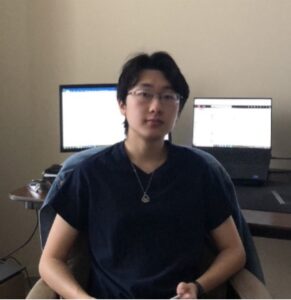
While there, his project focused on controlling a newly developed component on an ion implantation system. The setup involved eight input control variables, and Wang’s job was to tune each to achieve the best possible uniformity in the ion implantation process. Essentially, he was looking for the right combination of settings so that an ion beam could hit a wafer-thin material as evenly as possible. It’s a high-dimensional optimization problem with physical constraints and other confounding variables, which made it both technically challenging and genuinely interesting to Wang.
The technical challenge, however, was only part of the story. Wang joined a team where he was, by a wide margin, the youngest person in the room. His colleagues’ years of experience spanned over four decades, and navigating that intergenerational dynamic was its own education, “As the youngest person in the room, the best thing you can do is be patient, stay curious, and take the initiative to ask. Nobody expected me to know everything; they did expect me to engage.”
Academic Time vs Industrial Time
The most lasting lesson Wang took from his placement wasn’t technical, it was temporal. In a PhD program, a researcher can sit with a problem for months, refining models and chasing increasingly precise solutions. At Axcelis, the approach was different. Equipment was shared with other groups, colleagues’ time was finite, and the projects had hard end dates that, when reached, marked an end of access to the resources that were being used. Because of these constraints, Wang learned “You need to balance perfecting a solution with practical constraints to deliver the best solution for the application.”
Working heuristically without sacrificing rigor was the most practically useful skill he brought back to his dissertation from his placement. The experience also sharpened how he frames his own research. Watching optimization and machine learning methods succeed or fail in production environments prompted him to interrogate the assumptions that can pass unexamined in academic work. He returned to his dissertation with a longer list of questions and a clearer sense of which ones actually mattered.
Beyond the technical and temporal lessons, the placement clarified Wang’s longer-term direction. He is now pulled toward wanting to work at the intersection of data-driven methods and physical systems, whether in industry R&D or applied research. He already knows what kind of professional he wants to become: one who can move fluidly between physics, mathematics, and business need, because “the best engineers are translators.” Translators, Wang discovered, is the glue that holds siloed fields together to keep their conglomerate strong. They do this by facilitating effective communication between experts, enabling the theory-to-reality process to take place smoothly.
Concluding Advice
For PhD students considering the LEADERs program, Wang’s advice is to:
- Approach the Placement with genuine curiosity about the partner’s actual problems, not just as an opportunity to apply existing methods to new data
- Be willing to be confused before the real work begins
- Start the matching process early
- Document the informal conversations – those are often more valuable than the formal deliverables
For Wang, what began as a practical solution to a funding problem became one of the most formative stretches of his PhD. His LEADERs Placement offered him high stakes, real constraints, and the kind of hard-won clarity that’s difficult to manufacture in a lab.
Photo Credits: Zifeng Wang
Upon completion of the “Leading Self and Others” course, LEADERs program staff and partner companies select fellows who align with specific industry needs. PhDs are supported through the fellowship application process and placed in a specialized role to solve a problem in industry. The program is run by the PhD Network, which helps prepare students to enter the workforce as impactful researchers.
If you are interested in hosting a LEADERs student at your organization, or are curious about learning more, please contact Wendy Eaton, director of LEADERs partnership relations, [email protected]