
Talking with Professor Craig Ferris
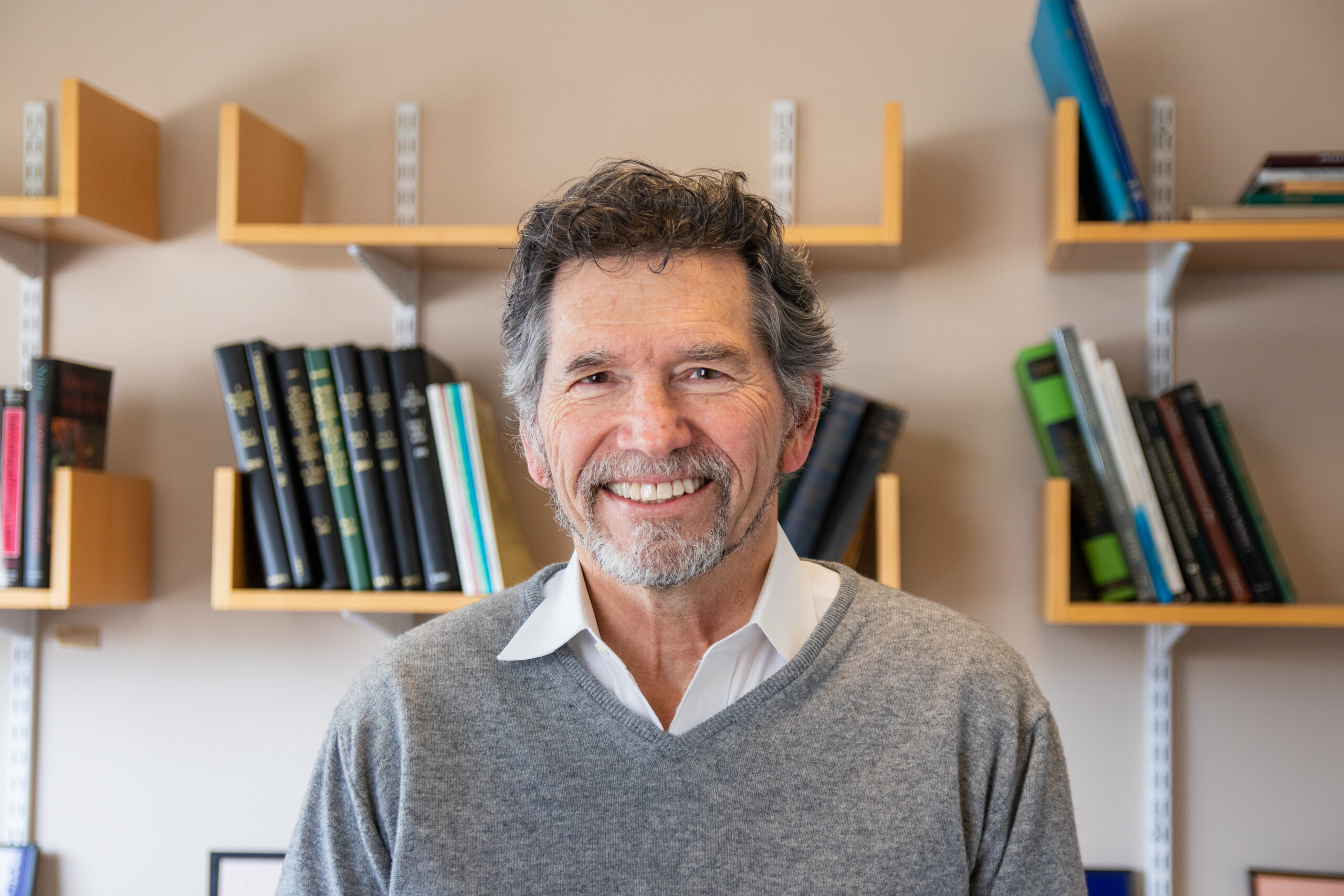
The director of the Center for Translational Neuroimaging and professor of psychology and pharmaceutical sciences explains how the LEADERs Program prepares students for the future—in industry or academia. That’s why, he says, every Northeastern PhD should enroll in its flagship course, “Leading Self and Others.”
Anna Fiorentino: It’s clear to anyone who knows her that Xuezhu Cai, now a senior scientist at Merck, is a rising star [see our recent story]. Why did you refer her to LEADERs in 2019?
Craig Ferris: Xuezhu came to us from Yale University’s biomedical engineering master’s program and she excelled at working with big numbers. Her research focused on finding new connections between different parts of the brain in neurodegenerative diseases like Alzheimer’s and Parkinson’s. It was more than just looking at the functional connectivity of how one part of the brain interacts with another. She had to bring all of that information into 3D MRI Brain Atlases.
Xuezhu went off and did her LEADERs fellowship at Merck and she excelled in the program. Now, was she doing anything related to the lab? No. That’s the beauty of the program. It puts students in areas of industry that they’re interested in, even though it may not be exactly what they’re doing in the lab. It gives them a whole new skillset and it also opens the door immediately for them, through a placement in industry, to be potentially hired afterwards.
She was so effective at managing people in her fellowship that when she graduated, Merck hired her as a senior person. There are many stories like this with the LEADERs program.
AF: What do you think LEADERs offers PhD students like Xuezhu?
CF: It’s one thing to get a PhD. But how does it really translate to industry? The LEADERs program gives these PhDs a shot. When you get out there and everybody knows who you are, and you’ve had this training in industry, doors open.
For example, a scientist who was also a PhD student in our lab, Sade Iriah, MPH, PhD’23, who studied oxycodone addiction and brain imaging, was placed in a LEADERs fellowship with Takeda Pharmaceuticals [a Japanese multinational biopharmaceutical company]. She went onto work as an imaging scientist at global research organization, Invicro.
AF: How does the LEADERs program fit into PhD education?
CF: It’s such a great program. I think the faculty sponsors like myself and others have to recognize this is for the student. It’s not for us. If the student wants to go out for six months and do this, it’s good for them because it promotes their career. Especially because it can be challenging for students to find a job in academia.
Another PhD student of mine took the LEADERs 7600 [“Leading Self and Others”] course and now has every intention of completing the LEADERs fellowship in his fourth year. This is a student who came in really interested in becoming a faculty member. Every PhD student should take the course so they know they can work in industry and then they can decide if that’s what they want or not.
AF: Can you touch on how LEADERs can help any PhD find the right career path?
CF: Academia is wonderful if you can get the job, but it’s a long road and in many respects you have to be pretty lucky with timing and who you connect with. I counsel students who are going on from PhDs to do a postdoc. I tell them to be very careful about who they choose to do their postdoc with. That faculty member has to be really well established. They have to be able to pick up a phone and open doors. The whole faculty track is tough. But today, industry has greater access to resources. There’s more money for research and the research can be in multiple areas.
The sacrifice that young people have to make to work in the laboratory is huge but can be rewarding. Following a postdoc it may be difficult to find a job. On the other hand, there’s a ton of commercial opportunities in Boston. The Boston area is the mecca of pharma and biotech right now.
LEADERs gives young people the chance to do the right thing for themselves. It’s also a great opportunity for them to come together with students in other disciplines who they wouldn’t otherwise converse with outside of their own silo. Even when they get out, in industry there’s not typically much cross fertilization with ideas. But they do that inside the LEADERs 7600 course.
AF: Why is the “Leading Self and Others” 7600 course so essential to graduating?
CF: When I get a call asking if I have any students who’d be interested in LEADERs, I immediately tell them to get in touch with the PhD Network about taking the course. It helps students think about management and leadership —and you could actually be recruited and signed to a wonderful lab in industry. It’s an opportunity to, eyes wide open, see what’s out there in the real world and try it out.
Every Northeastern student who enters a PhD program in any college or program should be taught about leadership and the workforce. The LEADERs course should be a prerequisite for all PhD students. They should immediately be taught how to look across disciplines and manage teams and projects. More people need to know about it and that’s why I tell all third year PhDs who come through my lab, “you have to consider the LEADERs course so you can know your career options.”
After the course, LEADERs places PhD students in custom fellowships. Why is matching the student’s research interest with an industry need so critical?
The LEADERs fellowships aren’t necessarily centered around a student’s present research, but what they really have a passion for, even if it’s not what they’re doing on the bench at that time. It’s about imagining where they see themselves in three or four years. These students are trying to find a bridge that connects their interests between industry and the lab. Northeastern University is really good at this and that’s why LEADERs is so important.
Upon completion of the “Leading Self and Others” course, LEADERs program staff and partner companies select fellows who align with specific industry needs. PhDs are supported through the fellowship application process and placed in a specialized role to solve a problem in industry. They go on to earn a LEADERs’ Experiential PhD leadership certificate, with guidance from an industry mentor and faculty advisor. The program is run by the PhD Network, which helps prepare students to enter the workforce as impactful researchers.
To learn more about earning the LEADERs certificate or partnering with the PhD Network to host a LEADERs fellow at your organization, contact Wendy Eaton, director of LEADERs partnership relations. Follow us on LinkedIn.